
Need support now? If you or a child is in immediate danger, call Triple Zero (000). If you need to talk to someone, Lifeline (13 11 14), 1800RESPECT (1800 737 732) and the Blue Knot Helpline (1300 657 380) are there for you.
Left Write Hook is not a crisis or support service. For more services, visit our Get support page.
Recovery pathways for survivors
Content note: This page talks about childhood sexual abuse and its impacts. It is not graphic, but it may be distressing. Please take care of yourself while reading, and step away whenever you need to. The Quick Exit bar at the bottom of this site will close this page at any time.
There is no single right way to recover from childhood sexual abuse. Every survivor's journey is different, and what helps can change over time. What matters most is that you have safety, choice and control over your own path. Being believed, supported and given control is critical to recovery, so any pathway worth taking should offer you all three. Here are some of the pathways survivors draw on, often in combination.
Counselling and therapy
Working with a counsellor, psychologist or psychotherapist experienced in trauma can help you process what happened at your own pace. There are many approaches, from talk therapies to body-based approaches, and a trauma-experienced practitioner can help you find what suits you. Your GP can set up a mental health treatment plan for Medicare-subsidised sessions. It is okay to change practitioners until you find the right fit, and you never have to share more than you choose to.
Helplines and immediate support
Specialist helplines like the Blue Knot Helpline (1300 657 380) and 1800RESPECT (1800 737 732) offer trauma-informed phone counselling and can help you work out next steps. They are also there for the wobbly days in between other supports. See our Get support page for the full list.
Peer support and group programs
Many survivors find enormous strength in connecting with people who understand. Peer spaces like The Survivor Hub, and peer-led group programs, reduce isolation and remind you that you are not alone and never were to blame. Group settings offer something individual therapy cannot: the experience of being witnessed and believed by others who have been there, and of witnessing their strength in return.
"Left Write Hook was the first place I shared my story openly with strangers, who became, by the end of the program, key figures in my healing journey."
- Sall, past participant
Creative and body-based practices
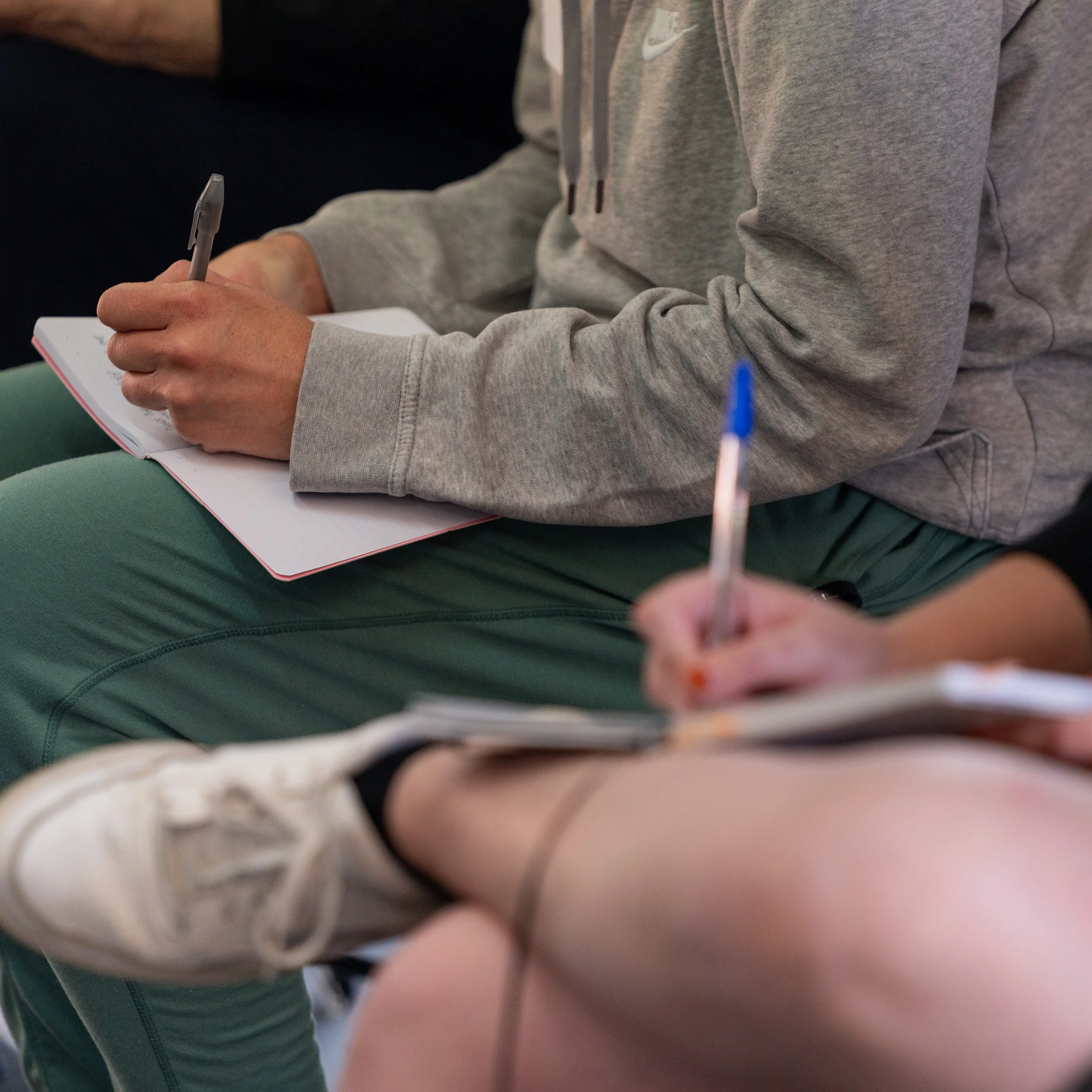
Trauma affects the body as well as the mind, so many survivors find that recovery works best when it involves both. Writing helps survivors find words for their experience and rewrite their stories. Movement helps release what the body has been holding. This is the foundation of the Left Write Hook program, which combines trauma-aware writing with non-contact boxing in a peer-led environment. Research with the University of Melbourne has shown participation is associated with decreases in depression, anxiety, stress and symptoms of complex PTSD, and we have just completed a Randomised Controlled Trial to strengthen this evidence further.
"The Left Write Hook program gave me a voice I had been trying to find, offering support and guidance as I began to explore both inner resilience and physical strength. It's something I hope to keep building on as I continue this journey."
- Ali, past participant
Everyday foundations
Alongside formal supports, recovery is built in small, daily ways: sleep and routine that steady your nervous system, movement that feels safe and chosen, creative outlets, time with safe people, and moments of grounding through your senses. These are not a substitute for support, and they are not about pushing through. They are quiet acts of care that add up over time. Blue Knot Foundation publishes practical self-care resources for survivors if you would like ideas.
From participant to peer leader
For some survivors, the recovery journey grows into leadership. Many Left Write Hook facilitators are past program participants who chose to train as qualified facilitators, completing nationally recognised certifications, a six week online course and an in-person masterclass, with mental health support throughout, including dedicated time with our senior mental health clinician while delivering programs. We recognise lived experience as expertise. By supporting survivors into peer work, we're helping create more survivor-led services and expanding opportunities within Left Write Hook and the wider mental health sector.
Recovery is not linear, and that is normal
Recovery is a discipline and a practice, built with commitment, repetition and community. There will be steps forward, pauses and hard patches, and none of that means you are failing. Impacts can resurface at different life stages, and support can be picked up again whenever you need it. It is never too late, and no setback undoes the ground you have gained.
Choosing your own path
Survivor-led programs like Left Write Hook are not a substitute for therapy, and many participants do both. Whatever pathway you choose, you deserve support that treats you with safety, dignity and respect. When you are ready, you can join the Left Write Hook waitlist or learn about the program.
Sources: Left Write Hook film site Resources; Blue Knot Foundation; The Survivor Hub; Left Write Hook research (leftwritehook.org/research); LWH Case for Support and Trainer packs (facilitator pathway); Voices to be Heard toolkit (recovery as practice and community); National Centre evidence to action newsletter (being believed, supported and given control).